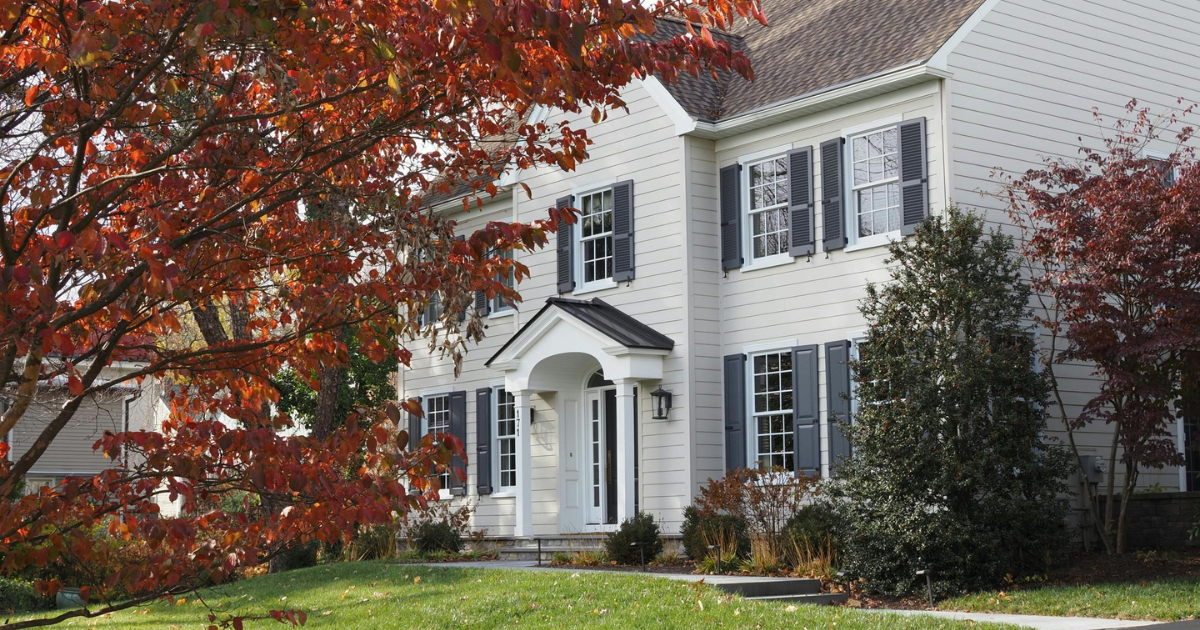
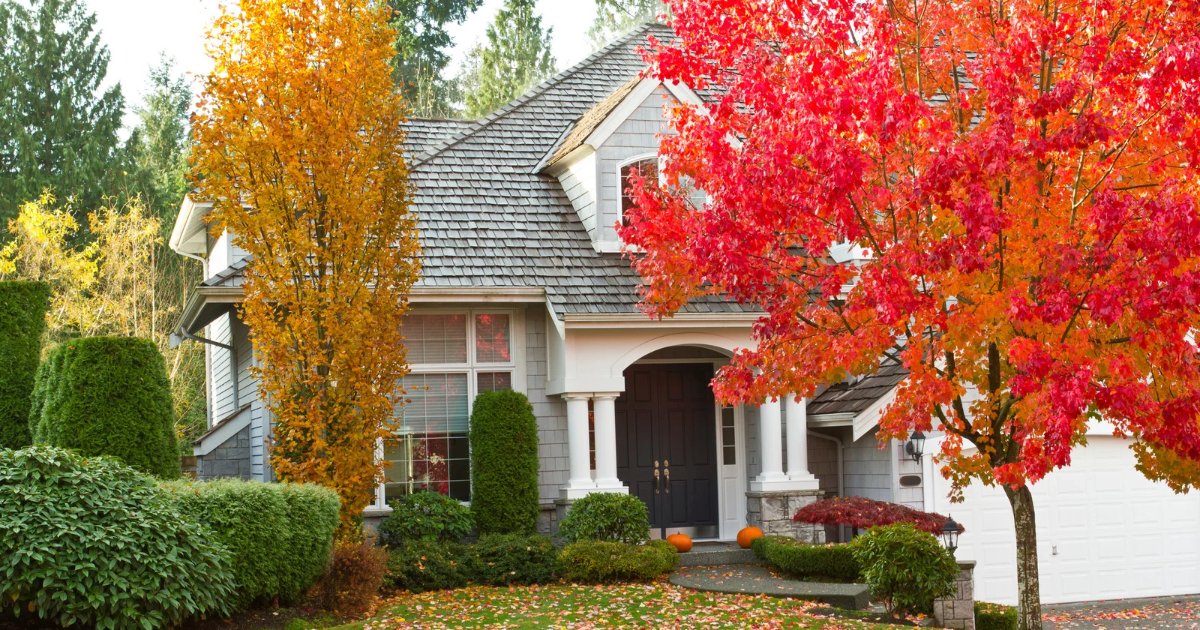
Most people picture house hunting in June, with the windows open, the lawn freshly cut and lilacs by the front steps. It’s lovely. It’s also the season when a house is easiest to fall for and hardest to really judge.
November is different. The leaves are down, the furnace is running and the sun sets before 4:30. That’s a lot less romantic. It’s also when a house shows you what it’s really like.
I’ve walked buyers through homes from Newburyport to Dover in every season. Some of the best purchases I’ve seen happened in the gray stretch between Halloween and the holidays, because buyers could see things that summer hides.
You Can See the Bones
With the trees bare, you can see the whole roofline, the gutters, the siding and the grading around the foundation. In July a big maple can hide a sagging gutter or a patch of tired shingles. In November it can’t.
Take a slow lap around the outside. Look for water stains under the eaves, gutters pulling away from the fascia, and spots where the ground slopes toward the house instead of away from it. If it rained recently, check the bulkhead and basement walls. A dry basement in August doesn’t prove much. A dry basement after a cold November soaking does.
The Heating System Is Actually On
This is the big one. In the summer, a boiler or furnace is just a box in the basement, and the seller tells you it “works great.” In November it’s running, and you get to see and hear it.
While you’re there:
- Is the house comfortable, or are some rooms noticeably colder?
- Can you hear the system clanking, banging or cycling on and off a lot?
- Is there a service sticker with a recent date on it?
- Is it oil, gas, propane or a heat pump? It makes a real difference to your winter bills, especially in older Seacoast and Merrimack Valley homes that have been converted once or twice over the years.
Ask for the last 12 months of heating costs. A good listing agent will have them, or can get them.
Drafts, Windows and Insulation
Stand next to the windows for a minute. Put your hand near the outlets on exterior walls. In a 1920s Colonial in Haverhill or a 1700s Cape in Exeter, some draftiness comes with the charm. You just want to know how much before you buy, not after your first January bill.
If there’s a finished attic or a bonus room over the garage, go up there. Those rooms tell you a lot about insulation, and they’re often the first to feel it when it’s done badly.
You See the Real Light and the Real Neighborhood
The sun sits low in November. If a living room still feels bright at 2 p.m. this time of year, it’ll feel great year-round. If the kitchen feels like a cave at noon, that’s good to know too.
Drive the neighborhood around 5 p.m. on a weeknight. That’s when you’ll see real commute traffic on Route 1 or 125, how dark the street gets, and whether neighbors have their lights on and cars in the driveway. In other words, you’ll see what it feels like to come home there in the dead of winter.
Less Competition, More Conversation
Fewer buyers are out right now. That usually means more time in each house, less pressure to decide by Sunday night, and sellers who are more open to talking about inspection items or closing dates. The sellers listing in November usually have a reason, and that often makes them easier to work with.
Let’s Go Look Before the Snow Flies
If you’ve been thinking about buying, this is a great time to get out there with someone who knows what to look for. At Laffely Real Estate Associates, we’re a local, boutique team, and we’ll walk every room with you and tell you what we really see.
Give us a call at (978) 255-4788 or visit laffelyre.com to start your search.